Széchenyi Chain Bridge
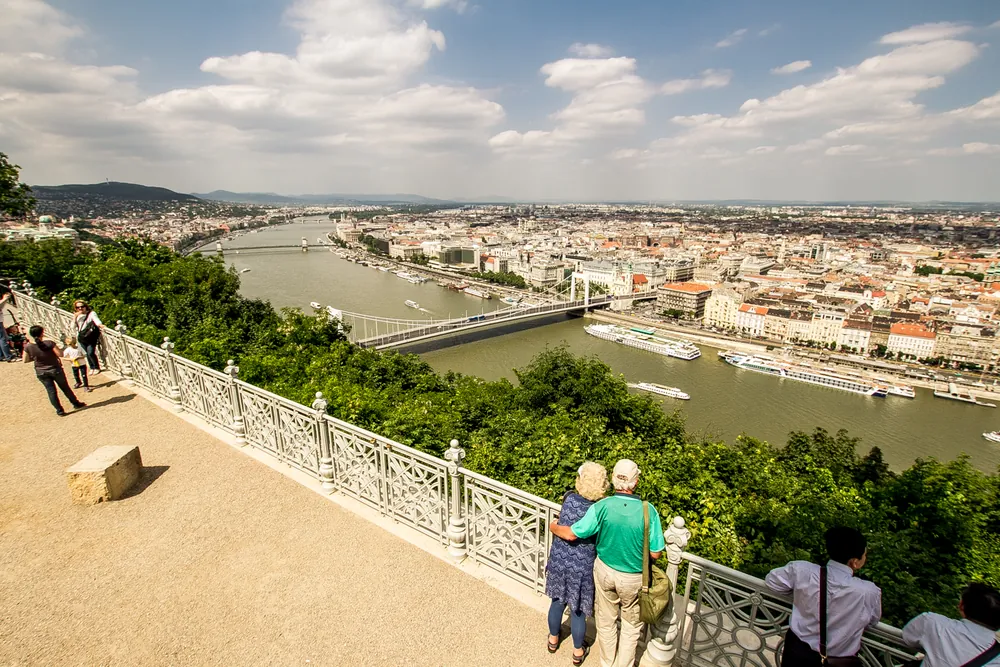
Must seeOne of Budapest's most iconic landmarks, the Chain Bridge was the first permanent crossing over the Danube, built between 1839 and 1849. The builders sourced the best materials available from across the region: wood from Slavonian forests, granite from Austria, sandstone from nearby quarries, and most of the iron structure from England. At peak construction, around 1,500–1,800 people were involved between the building site and the production of materials. The engineers and ironworkers were brought over from England, and some never left. Adam Clark, who oversaw the construction, was one of them. The bridge was nearly complete by 1848 and was already being used to move troops during the revolutionary war. In May 1849, Clark flooded the chain chambers to stop imperial troops from blowing it up. It worked. The official handover came on November 20, 1849, and the first person to cross it was Haynau, the feared Austrian field marshal overseeing the post-war reprisals. The lion statues by sculptor János Marschalkó were added the following year. By the early 1900s the iron structure had deteriorated enough to require a full rebuild, completed between 1913 and 1915. That version didn't last long either. On January 18, 1945, retreating German forces blew it up, along with every other Danube bridge in Budapest. The bridge was reconstructed between 1947 and 1949, restored to its 1915 appearance, and has stood ever since.